
Home » Posts tagged 'Classical Music' (Page 7)
Tag Archives: Classical Music
15th Annual Mozart Birthday Concerts

(l to r) Nashville Symphony musicians Gil Perel & Roger Wiesmeyer
Wolfgang Amadeus Mozart was born on January 27, 1756. For the 15th consecutive year, Roger Wiesmeyer’s Mozart in Nashville will present concert celebrations in honor of the Austrian wunderkind’s birthday. As in years past, this year’s events feature an ensemble of local musicians – including members of the Nashville Symphony, free-lance professionals, and amateurs – who will perform two benefit concerts for a local charity featuring music by Amadeus.
This year’s concerts will take place:
Friday, January 13, noon, at St. George’s Episcopal Church, 4715 Harding Road, Nashville.
Monday, January 23, 7 pm, at Edgehill United Methodist Church, 1502 Edgehill Avenue, Nashville.
This year’s concerts feature:
Piano Sonata in B flat Major, K. 333
Roger Wiesmeyer, piano solo
Bassoon Concerto in B flat Major, K. 191/186e
Gil Perel, bassoon solo
Mozart Birthday Festival Orchestra
Proceeds will benefit the Mary Parrish Center for victims of domestic abuse and sexual violence.
2016: What Kind of Blog Is This?
Off The Podium Reflections, Statistics, and Top Ten Posts
As I did last year at this time, here I review my experience writing Off The Podium this year and share some statistics, what I have learned, and come clean on what exactly this blog is about.
The year has been a wild ride. Off The Podium has provided a great means to share the activities of the department of Education & Community Engagement at the Nashville Symphony and the launch of our Accelerando program with the Nashville community and the world. It has also continued to provide me with a format and incentive to develop my writing on the topics of Music and Education – regular features of Off The Podium that now reach thousands of readers all over the world.
The Hallelujah Chorus
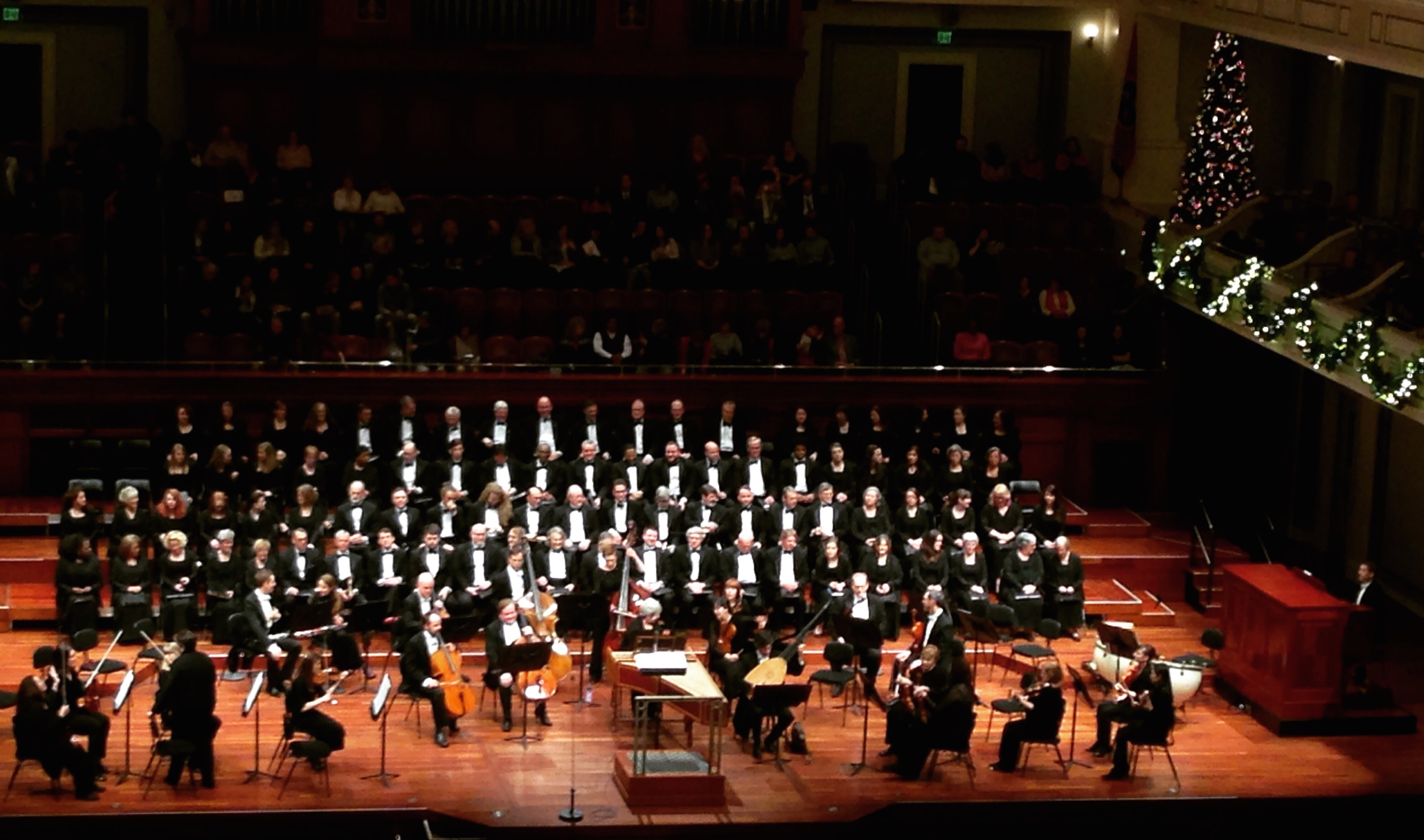
The Nashville Symphony and the Nashville Symphony Chorus gather onstage moments before a performance of Händel’s Messiah, December 18, 2016, Schermerhorn Symphony Center, Nashville
Part of a series of articles on
Preparing a School Winter Solstice Performance
This past week the Nashville Symphony performed our annual string of December Messiah concerts. An annual event featuring a different conductor and vision for the performance of this masterwork each year, it is remarkable to me how resilient Händel’s Messiah is, and how much the community here at the symphony -as well as the larger surrounding community of Music City – looks forward to it every year. It’s one of those monuments of the repertoire that has become part of the collective consciousness.
This year’s performance with guest conductor Christopher Warren-Green brought a historically-informed perspective to the performance, with brisk tempi and the incorporation of a theorbist who doubled on baroque guitar to the continuo section. I was thrilled to hear how excited our musicians were about Messiah this year in conversations I had with them (or overheard) during rehearsals. Sitting in the balcony on Sunday afternoon for the final matinee performance, the enthusiasm of the musicians and the audience was palpable. In the exhilaration following the concert I found myself thinking a lot about this remarkable piece of music, and especially one movement in particular – the unique and absolutely one-of-a-kind Hallelujah Chorus – and why and how it occupies such a singular place in our musical culture.
The Capirola Lute Book
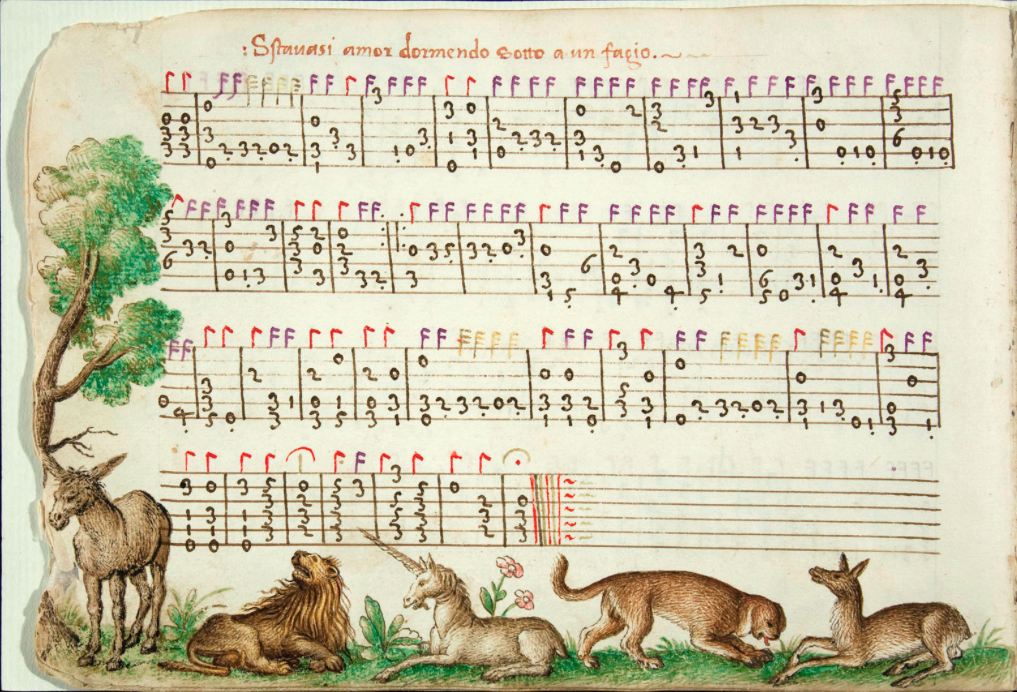
a page from the Capirola Lute Book (click to enlarge)
The Lute Part IX
In the early 16th century an amateur lutenist in Venice compiled an undated manuscript consisting of lute pieces in Italian tablature composed by his teacher. He names himself Vidal in the book’s preface, and states that in order to ensure that the music contained in its pages is preserved, he has decorated it with “noble pictures” so that it will be treasured for their sake should the book come into the possession of some who may not appreciate music. Indeed, 45 of the manuscript’s 147 pages feature elaborate pastoral illustrations in full color, and the book has been preserved: this is the famous Capirola Lute Book. It is one of the earliest and finest manuscripts of lute music to survive – perhaps the most beautiful – and it contains the only known selection of music by one of the the early 16th century’s finest lutenists, a Brescian nobleman named Vincenzo Capirola.
Education & Community Engagement at the Nashville Symphony: Fall 2016 Review
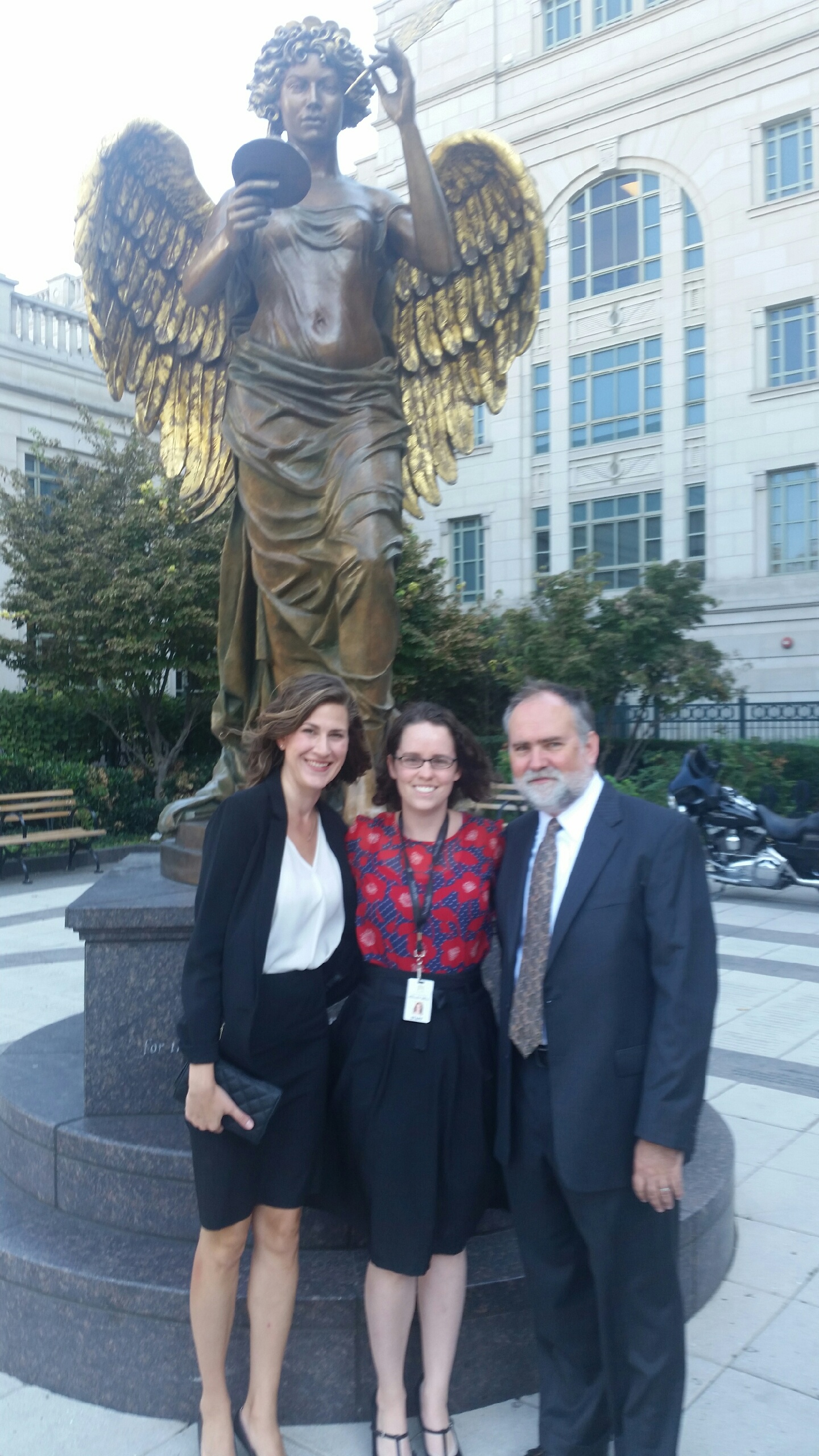
Kristen Freeman, Kelley Bell, and Walter Bitner, October 17, 2016 ~ photo courtesy of Roger Wiesmeyer
Once again December is here. Thanksgiving is past and the headlong rush to the end of the year has begun. Over the last unseasonably warm months as we waited for fall to come, the Nashville Symphony has continued to fulfill our mission to bring music to the community through our education and community engagement programs, in addition to our multitude of concert offerings. It’s a veritable musical banquet for Music City here at Schermerhorn Symphony Center!
Let’s look back on the activities of our department this fall:
Nashville Philharmonic Premieres Chris Farrell’s Violin Concerto

Chris Farrell & Jessica Blackwell
Next week the Nashville Philharmonic Orchestra will give world premiere performances of a new violin concerto by Nashville composer Christopher Farrell on the program of their upcoming “Royal Coronation” concerts on December 6 & December 11. Among Nashville’s (now several) volunteer community orchestras, the NPO is the most well-established and performs the most demanding and developed series of concerts each year. These performances will be led by NPO Music Director Christopher Norton and feature NPO Concertmaster Jessica Blackwell as soloist, for whom Farrell wrote the concerto.
Both Chris and Jessica are longstanding members of the Nashville Symphony. I first met them both years ago when I was directing Music City Youth Orchestra: Jessica led sectional rehearsals for our violinists, and Chris taught private lessons to some of our students. I’ve had the great pleasure of collaborating with them on a number of projects here at the symphony over the last couple of years, and was excited to get together with them to talk about the new concerto.
2017 Accelerando and Curb Concerto Competition Applications Open Today


Online applications for two major Nashville Symphony education programs are now live: qualified students may apply to audition in early 2017 for both our groundbreaking new Accelerando program and our annual Curb Concerto Competition.
The Frottolists and the First Lute Songbooks

Un Concerto, c. 1485-1495 by Lorenzo Costa (1460-1535) ~ National Gallery, London
The Lute Part VIII
continued from
Ottaviano Petrucci and the First Printed Lute Books
From the end of the 15th century into the first decades of the 16th century – a period estimated by historians to be from about 1470-1530 – a secular polyphonic song genre known as frottola flourished throughout the courts of Italy. This poetic and musical movement paved the way for a distinctly Italian musical renaissance style featuring primarily Italian musicians and composers in contrast to the dominance of composers from Northern Europe in Italy from the 14th – 15th centuries, and prepared a fertile ground for the development of the madrigal later in the 16th century.
Hand in hand with the rise of the frottola was the development of a revolutionary technique that allowed musicians to play polyphonic music in 2, 3, or more parts on one lute. By the end of the 15th century, most lutenists had dropped their plectrums in favor of the new style, and plucked the strings with the fingers of the right hand. When Petrucci published the first books of lute tablature beginning in 1507, all of them and all of the tablature that followed for the next next two and a half centuries assumed the new technique.
Ottaviano Petrucci and the First Printed Lute Books

Frontispiece of Harmonice Musices Odhecaton ~ Canti A (1501) by Ottaviano Petrucci
The Lute Part VII
He did not compose for lute nor was he known to perform on it, but Ottaviano Petrucci (1466 – 1539) was nonetheless a vital figure in the history of the instrument, and profoundly influenced the course of musical development in the 16th century, and indeed music history in general.
Petrucci was an Italian printer and a pioneer in the publication of music printed from moveable type. In Venice at the very beginning of the Cinquecento, Petrucci produced the first known example of printed polyphonic music: a collection of secular songs titled Harmonice Musices Odhecaton, in 1501.
He also was the first to print instrumental music: several books of lute tablature, produced in 1507 and 1508. Today he is known as the father of modern music printing.
The Tallis Scholars Sing Josquin

The Tallis Scholars ~ photo © Eric Richmond
I don’t like to think of myself as a critic or a reviewer, but occasionally I make a raid into the territories inhabited by these creatures. Last week the English choir The Tallis Scholars released a new CD of Josquin Masses, and as I marveled for the ten-thousandth time at the sublime accomplishment of this ensemble in the stolen moments I was able to spend listening to it, I decided not to let it pass without remark.
Just in case you aren’t familiar with them, The Tallis Scholars were founded in 1973 by their director Peter Phillips, and are the world’s leading performers of renaissance polyphony. A good argument could also be made that they are the finest and most accomplished choir in the world, and the finest early music ensemble – notwithstanding their occasional foray into contemporary choral literature. (more…)
 Walter Bitner