
Home » Philosophy (Page 4)
Category Archives: Philosophy
Is Music a Commodity?
 Our consumer culture has a strong tendency to overshadow other human values and reduce every aspect of human life and culture to an economic appraisal. This is as true of music as it is of anything else.
I’ve thought about this a lot over the years and discussed it many times with students and colleagues. Recently it was brought to my attention when a blog post about “the value of music” and “the state of the music industry” over at The Boot from a few years ago resurfaced on my FaceBook feed. The post is called Vince Gill Discouraged by “Mind-Numbing” Country Music.
Orpheus

detail from Orpheus leading Eurydice from the Underworld by Jean-Baptiste-Camille Corot (1796-1875)
Apollo is the Sun. In the exalted solitude of his journey through the heavens each day, He hears the Harmony of the Spheres: the perfection of proportions in the orbits of the heavenly bodies – the Sun, the Moon, and the planets together resonating an etherial and celestial music never heard by mortals.
Perhaps it was this celestial harmony Apollo remembered when He saw young Hermes strumming on the strings of an instrument the child God had made from the shell of a tortoise. Hermes had stolen some of his cattle and Apollo was very angry, but when the Sun God heard the delicate yet enthralling sounds of Hermes’ lyre, His temper cooled and Apollo allowed Hermes to keep the cattle in exchange for the instrument. Apollo endowed the lyre with His solar power, inventing Music. Through His divine example He inspired men and women to live virtuously, to emulate the Gods, and to create Music and poetry for themselves.
The Boar’s Head Carol.

posing with the Boar’s Head before a Tastes & Sounds of the Season performance, Nashville School of the Arts, 2012 ~ photo by Brooke Semar
This is the first holiday season in years that I have not spent consumed by the preparations and execution of a big school performance. Over the last 25 years I directed many of these, with students of all grade levels K-12. In fact, for much of my adult life, I have spent most of each fall listening to, arranging, teaching, and rehearsing Christmas and holiday music – beginning as early as August in some years.
However, in the last few months when I found myself reminiscing about it, I realized that it was already far too late to write anything that would be of any immediate use or interest to choir directors and elementary or middle school music teachers who may read this – most initial planning for these extravaganzas happens in the summer.
I decided to put off writing in earnest about my experiences producing these performances – and my thoughts on how and why to do so – until next summer, when it will hopefully be more useful. But so as not to gloss over the whole issue without any consideration at all, we will content ourselves with a single post this season about a carol whose performance became a hallowed and beloved tradition for so many of my students over the years. I am talking about, of course, The Boar’s Head Carol.
What Kind of Human Being Do You Want To Be?
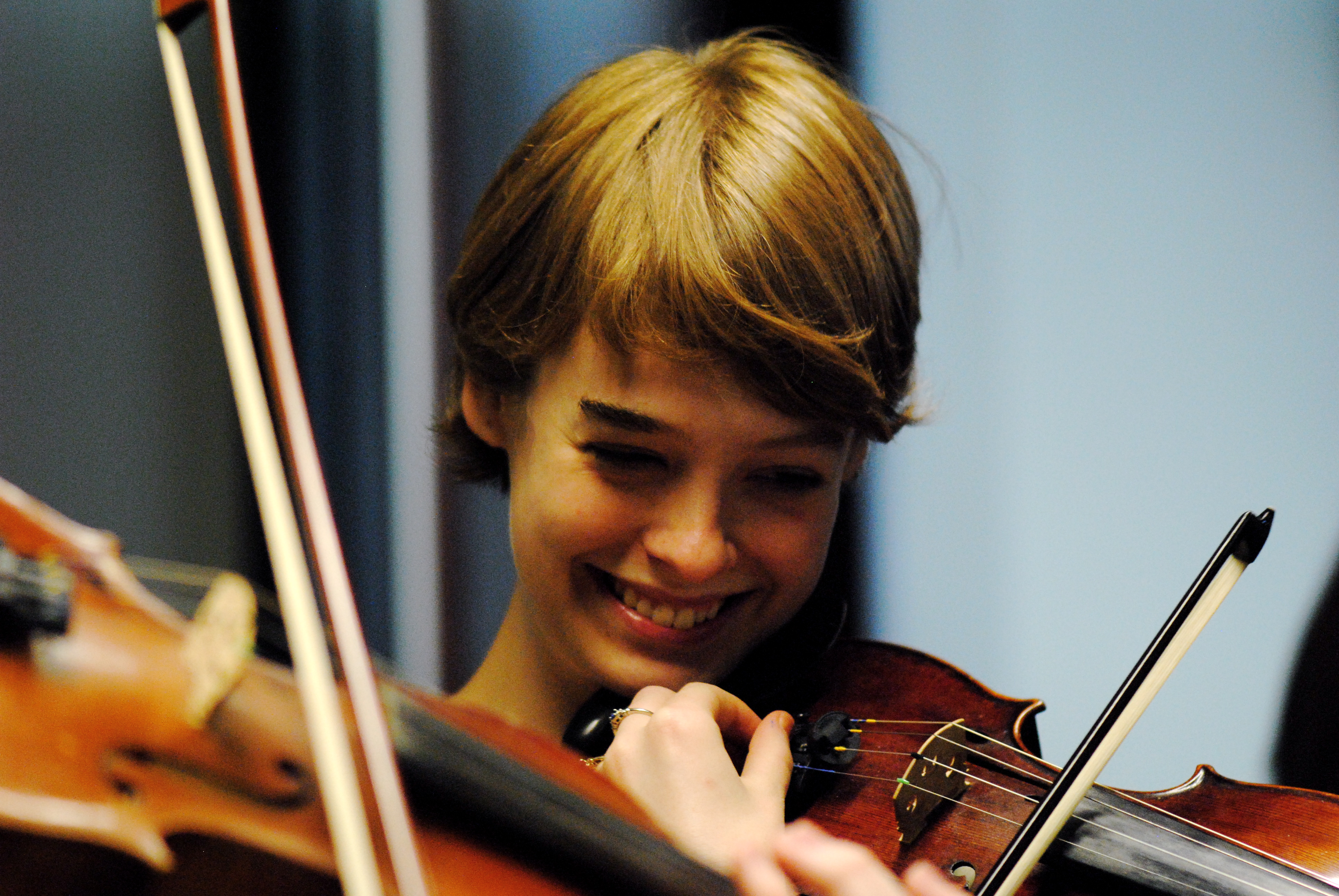
Music Education and the Whole Child
This weekend I attended a chamber music recital presented by a small local community music school. Roughly twenty students from middle and high school presented an hour of short pieces for small ensembles: music for woodwinds and strings, with a couple of pieces featuring voice as well. The students represented a wide range of experience, accomplishment, and commitment; some of these children will go on to study music in college and perhaps even pursue professional careers as performers or educators, while others will likely put their instruments away for good by the time they graduate from high school.
Regardless of the differences in commitment for the students and their families – to say nothing of the teachers – all of them clearly regard music as an important part of their lives. Parents make it possible for their children to attend weekly lessons and regular ensemble rehearsals, have the instruments and other materials they need, and the students must exert consistent effort over a long period of time (years) to learn how to play their instruments and develop at least enough acumen that they derive satisfaction from the process.
Why do they do it?
SHAME Education Poised to Infiltrate U.S. Schools
 In the wake of the recent news that the U.S. Senate has passed the Every Child Achieves Act, proponents of SHAME Education in our schools are taking a more vocal stand about the controversial new approach to K – 12 education. “The inclusion of music and arts education as acknowledged core subjects is a big step towards SHAME for everyone!” said one teacher.
Flying in the face of the contemporary wisdom that the purpose of education is to prepare students to join the workforce in hip, uptempo careers where they have more opportunities to consume technology, proponents of SHAME advocate a radical approach to education that seeks to introduce children to a wide survey of human endeavor across many fields during their school years. Supporters of SHAME contend this “well-rounded” education will better prepare them to function as adults in a swiftly-changing society than the popular STEM curriculum so many of our schools have spent the last decade or more converting to.
Trust
This article is a companion to my previous post Wholehearted Attention.

from my Instagram feed: Nashville Symphony Education & Community Engagement Program Manager Kelley Bell guides a young guest in playing his first notes on the trumpet before our Community Concert at Centennial Park, Nashville, June 4, 2015
It’s generally accepted that one of the goals of education – beyond the attainment of specific content objectives – is to instill in the child a love for learning. It has been my experience however, that a love for learning is part of a child’s natural state and does not need to be instilled. Children who exhibit behavior to the contrary have most often faced social and/or emotional difficulties that impede their inherent wish to learn and grow; some of a teacher’s work involves trying to determine what these obstacles are and finding ways around them. Beyond providing the child an acquaintance with and proficiency in the broad array of subjects necessary for success in life, the overarching goal of education might be better described as enabling the child to become her own teacher.
Wholehearted Attention

Grannis Photography
Music teachers in school settings often feel a sense of isolation from the activities happening in other classrooms, and a lack of understanding on the part of other teachers and administrators about what it is, exactly, that music teachers teach. There are striking differences in the way teaching and learning happens in the music classroom when compared to the activities happening in other classes. In the current standards-obsessed education climate, appropriate musical activity in the classroom faces real obstacles in being appreciated, understood, and ultimately funded, because it resists being reduced to a checklist of objectives.
Which is not to say that there are not discrete objectives for a music teacher to impart to his or her students – quite the opposite, in fact. Music-making is such a complex activity that the act of separating all the components that go into it into easily assessed bytes of information ultimately leaves out essential aspects of what it is really about, presenting an incomplete picture at best, and at worst, a distorted view of the purpose and value of musical activity.
Sumer Is Icumen In

the earliest known copy of Sumer Is Icumin In; British Library Harley 978 folio 11v
When I was an elementary and middle school music teacher (1991 – 2007), I structured a lot of my curriculum – especially the songs I chose to teach my students – around the seasons. While it may seem like an obvious educational strategy, I think it is important to stress the value of this. Children in our society are living in environments that are increasingly divorced from any sense of connection with the natural world. Part of a music teacher’s mission is to give children not only a developed set of skills but also a generous survey (content) of our musical tradition, and the music literature – especially the song repertoire – includes a wide variety of examples of the use of music to evoke, celebrate, and otherwise honor many aspects of the natural world from which we come – and which we are still a part of, whether we recognize it or not.
Our Friend Sebastian

Anna Magdalena Bach’s autograph of Menuet in G, 1725
Today is the 330th birthday of Johann Sebastian Bach.
Like so many of us, I first encountered his music as a child. I don’t actually remember the first time I heard it – it might have been at church, it might have been in a piano lesson. I am pretty certain that the first piece that I became aware of and associated with his name was Menuet in G. It was only years later that I learned that scholars actually now believe this piece was written by Christian Petzold (1677-1733), but no matter. Sebastian is still credited as the composer in most piano books one will encounter, and if it was good enough for his children…
 Walter Bitner