
Home » Philosophy (Page 3)
Category Archives: Philosophy
The Rhinoceros
Why you shouldn’t always tell your students the truth

For more than half of my teaching career, I taught music & performing arts at elementary or K-8 schools – six of these schools in all, with a wide range of approaches to education between them. One common aspect among all my experiences at these schools, however, is that I spent the majority of my time at each school – thousands upon thousands of hours of my life – as the only adult in the room, in front of a group of children. We spent most of our time together singing or playing music, dancing, rehearsing plays, or working on developing our skills to do these things, but over the years we had a lot of interesting and sometimes amazing conversations – both on and off topic.
Early in my career I began to practice intentionally not answering all of their questions, hoping to spur their imaginations and spirit of inquiry, and that they would develop the habit of trying to find things out for themselves. My experience was that often students would come up with very interesting and insightful ideas about the world if I could refrain from shutting down the possibilities that opened with a question by slapping a pat answer on it.
Sometimes, especially with younger elementary school children (K – 3 or so), I took this practice a step further, and intentionally told them things that weren’t true. The story of “The Rhinoceros” that I told to first grade students at Carrollwood Day School when I taught there from 1999 – 2003 is the tallest example of these tales that I told over the years, and became something of a tradition and a legend there among the students, some of whom would even corroborate my story and help maintain the myth among the younger students once they discovered I had been leading them on.
The Count
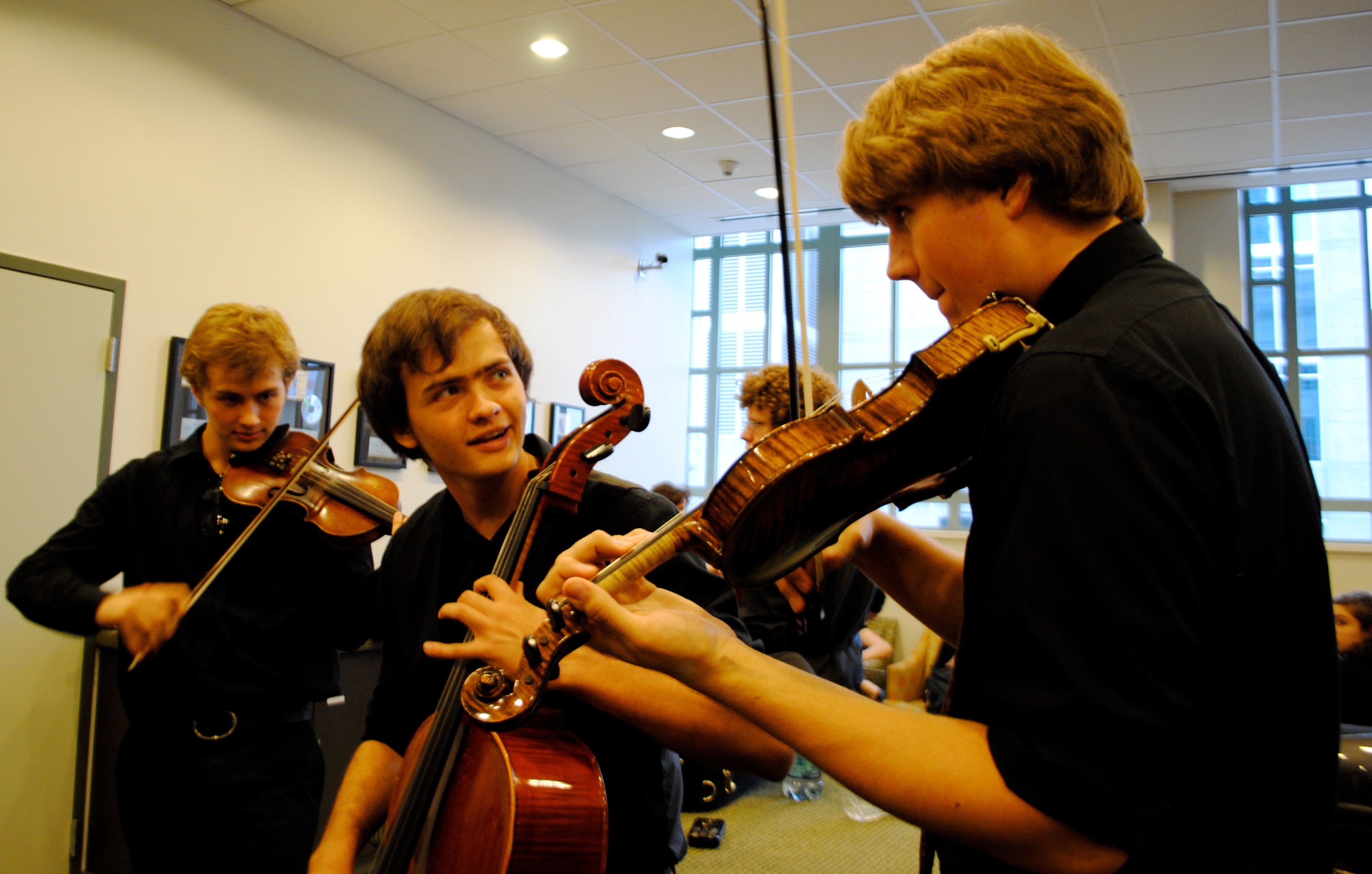
Music City Youth Orchestra students warm up before a concert, May 22, 2011, Schermerhorn Symphony Center, Nashville
The Count is a concentration exercise – a group activity – that I used with my student ensembles in the last few minutes before going on stage for a performance. It is a very useful thing to do! and became something of a special ritual with my ensembles.
I didn’t invent The Count, although I had never heard it called by any name before my students began calling it this. I first encountered it in the early 1990s when I witnessed Ellen Provost, a teacher at Blue Rock School, use it with a group of 6th graders before the performance of a play – I believe it was either The Conference of the Birds or Monkey. I began using it myself at Carrollwood Day School years later, and it was at CDS that it became a regular practice – something I always did with my students before a performance, if possible, for the rest of my teaching career.
Learn Their Names First
The Name-Learning Stunt®

preparing young singers for a performance, Blue Rock School, 1994
I urge every teacher who works with groups of children to do this. At the beginning of the school year, or whenever you are beginning to work with a group of students you do not know for the first time – or perhaps a group that is a new constellation, some of whom you know and some you do not – take the time to learn all of their names right from the beginning, and make a special effort to do so. It will take some time and effort, but will reap big rewards in the long run and begin your relationship with the students on a sound footing by demonstrating concretely that you care about them.
It occurred to me to write about this yesterday. I was making a “guest appearance” at a summer choral music day camp to work with a group of students I did not know – I was given a 45 minute period in which to bring them some singing activities. Without any consideration at all I planned to begin my work with them with the name-learning stunt (described below) that I developed at the beginning of my career, and which I used invariably whenever I found myself in front of a new group of students. I did this even though it used up several precious minutes of my brief 45 minute window, because I knew that if I did this first, the rest of the class would go so much better.
The Richness of Difference
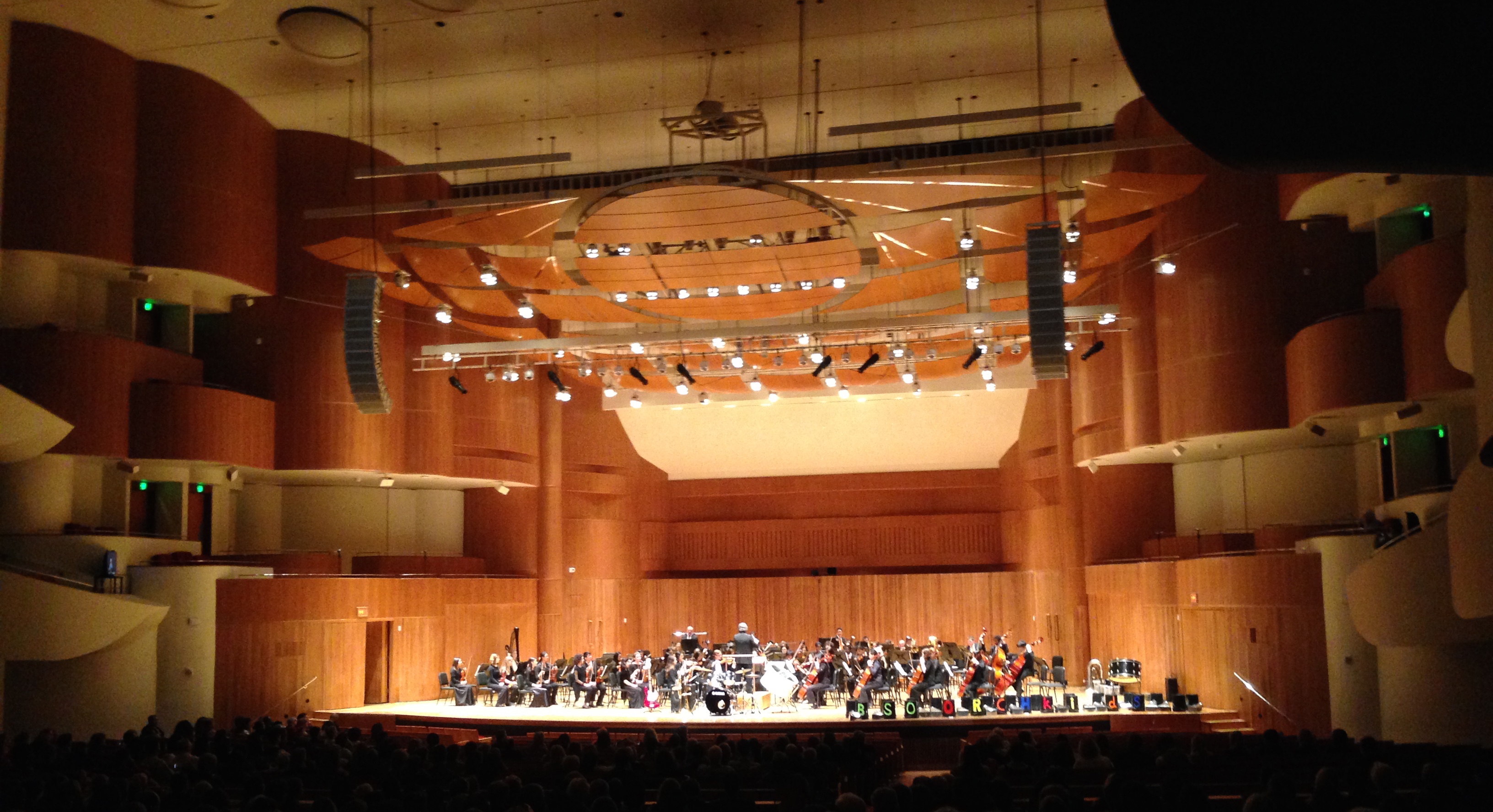
Baltimore Symphony Youth Orchestra Concert Orchestra, MaryAnn Poling, conductor, performs Respighi at the opening ceremonies of the League of American Orchestras annual conference ~ June 9, 2016, Joseph Meyerhoff Symphony Hall, Baltimore
Last week the League of American Orchestras held our industry association’s 71st annual conference in Baltimore. The national event was hosted by the Baltimore Symphony Orchestra and brought hundreds of representatives from orchestras across the country – as well as other related organizations – to share dialogue, strategies, networking, and of course music, in several packed days of intense conversation.
I was there for the entire conference, not only as a first-time attendee, but as a speaker – it was my honor to represent Music City and to share about the Nashville Symphony’s groundbreaking Accelerando program with orchestra education and community engagement staff, El Sistema educators, and other interested parties from across the country.
Silence
 Emptiness at the Heart of Music
So often when we speak or write about music – when we practice, when we listen or perform – the focus of our attention is on the notes being played. These notes, their pitches and rhythmic accuracy, the articulation and tone with which they are produced, how fast or slow they come one after another, how they blend with those being played by others if we are playing in an ensemble: these notes and the attention we pay to them form the basis of so much of our work as musicians.
Yet there is another element to music making that is just as essential as the notes: silence. Silence is there before the music begins and continues after it ends. Silence punctuates the spaces between the notes and exists even as the notes are sounding, buoying the notes up like foam on the crests of waves on the surface of the ocean. Silence isn’t just the absence of sound. It is what gives music perspective and depth, and the power to penetrate deep into the psyche of the listener.
Without silence, there is no music.
The Ballad & The Requiem
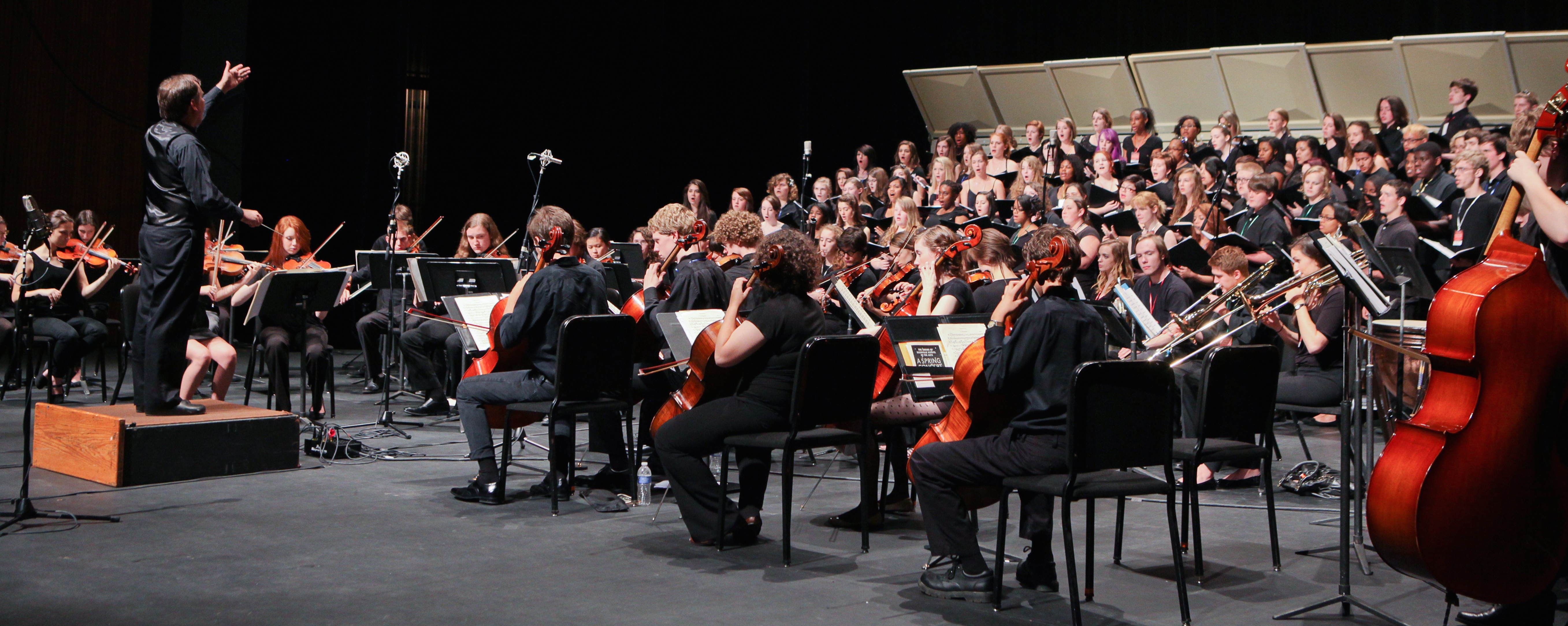
dress rehearsal: directing MCYO and the NSA Festival Choir in Seven Choruses from Mozart’s Requiem, April 30, 2012, Tennessee Performing Arts Center, Nashville
My grandfather died nearly 22 years ago. At that time I was living near New York City, and I drove to his memorial service at a church in Eastern Pennsylvania. More than two decades later, I don’t remember too many things from that experience, unfortunately – my wife and I had a newborn baby, and we had a lot of things on our minds at the time. I do, however, have two strong memories from that day.
The first memory is that it occurred on the day of a solar eclipse, and I remember standing out in the church parking lot after the service and looking at a shadow of the eclipse in progress on a piece of paper with my uncle, who commented on how much Grandpa (a scientist and a doctor) would have loved the eclipse, and no doubt would have prepared a much better way to observe it.
The other memory, which is stronger, and the first thing I remember when I think about that day, is standing in the pew during the service singing A Mighty Fortress is Our God along with everyone else there, and my eyes filling with tears as I sang it. I was told that day (by someone, I don’t remember who now) that this was my grandfather’s favorite hymn.
Four Practices
 When I read education articles or discussions of education practices on the internet, a theme that I constantly encounter is classroom management and discipline. Current trends in behavior modification theories and practices have promoted a widespread use of reward systems for social (as opposed to anti-social) behavior that is at odds with my own beliefs about education.
In 1998, our four-year old son was enrolled in a preschool program, and we learned from him one afternoon that at his (church sponsored) preschool they were paying the children for good behavior in play money and on Fridays, allowing the children who had accumulated some “cash” to spend it on toys or candy from the “store”.
My wife and I were shocked at what I still regard as a deeply cynical approach to the education of young children, and withdrew our son from that program immediately.
Understanding Accelerando: FAQ
 Our very first auditions for Accelerando are around the corner: applications and all supporting materials are due by Friday, March 4, and auditions will be held at W.O. Smith Music School on Saturday, March 12.
For the last two months, our Education & Community Engagement Department here at the Nashville Symphony has held information sessions out in the community and fielded many questions by email and phone as we seek to find the right students to begin this groundbreaking program this year.
Accelerando is a unique music education initiative distinct in many ways from other music education programs in Middle Tennessee. In order to foster greater understanding of the goals of Accelerando, what the program entails, and who is eligible to participate, I have compiled here a list of some of the most frequently asked questions we have received about Accelerando – together with some responses.
Assessment Reform Movement Gains Ground in U.S. Schools
 Parents and teachers across the nation have become increasingly disappointed with the current implementation of standardized testing in U.S. schools – and now, some of these assessment advocates have organized and formed ARM: the Assessment Reform Movement.
In recognition of the tremendous need to create more data for our data-driven education models, ARM seeks to educate teachers, parents, and students about the critical importance of assessments, and to encourage a dramatic increase in the use of these vital educational tools in our schools over the next five years.
2016 SphinxCon: Ignite to Action
 Earlier this month I traveled to Detroit to attend SphinxCon – the 4th annual conference on diversity in the arts presented by The Sphinx Organization. This was my first experience attending this conference, and it was a good experience, and particularly relevant to the work my department has been intensely engaged in: we are now in the midst of launching the Nashville Symphony’s new diversity program Accelerando. Our very first auditions for Accelerando will be held on March 12.
I returned to Nashville a week ago for a schedule turned upside down due to snowstorms, but many of my impressions from the weekend in Detroit have stayed with me, and I’ve tried to write down some of them here before the march of time goes on much longer and they recede into the background.
 Walter Bitner