
The Brandenburg Concertos

disputed portrait of Sebastian by Johann Ernst Rentsch the Elder (d. 1723) painted c. 1715, which would make him 30 years old here. Sebastian wrote the Brandenburgs in his early- to mid-thirties and submitted them to the Margrave in 1721
Johann Sebastian Bach’s Brandenburg Concertos are in the front rank of the masterpieces of Western music, and are his most-performed and best-known works. Ironically, these remarkable pieces are not simply the best or most popular works from a large number of similar efforts, as for instance is the case of Vivaldi’s The Four Seasons – they are unique in Sebastian’s oeuvre in almost every way. The Brandenburgs are not representative of Sebastian’s output except in the masterful manner of their composition and in the virtuosic forces needed to perform them.
Nashville Early Music Festival 2015: Saturday
Part 2 of 2
This is the conclusion of the story I began in Nashville Early Music Festival 2015: Prelude & Friday

Participants Chorus – Mareike Sattler is not pictured as she was taking the photo
Saturday
On Saturday morning I made it back to Lipscomb before the 9 am voice masterclass in Ward Hall with Margaret Carpenter. Brooke sang first and worked with Margaret for a half hour, followed by countertenor Patrick Dailey, who sang Thomas Campion’s Never Weather-Beaten Saile: another lute song, which I also accompanied. Margaret had many helpful suggestions for each singer – mostly focusing on expression – and the hour went by quickly. I ended up staying in the room for the next session as well – Participants Chorus with Terri Richter and Mareike Sattler – and served as impromptu accompanist as we sight read sections of Vivaldi’s Gloria.
Nashville Early Music Festival 2015: Prelude & Friday
 Part 1 of 2
This past weekend I had the great pleasure of participating in Music City’s first ever festival dedicated to music from before the time of Haydn, Mozart, and Beethoven. The inaugural Nashville Early Music Festival was held Friday & Saturday, September 25 & 26 at Lipscomb University (the festival’s sponsor), and included copious performances of (mostly) baroque music by local musicians as well as visitors from around the country, as well as more informal presentations, masterclasses, and opportunities for musicians, students, and anyone else interested in Early Music to listen, learn, converse, enthuse, and make friends.
I know that I am not alone in hoping that this is only the first annual event for a festival that will grow into a tradition, bringing Early Music to Nashville for years to come.
Nashville is Music City
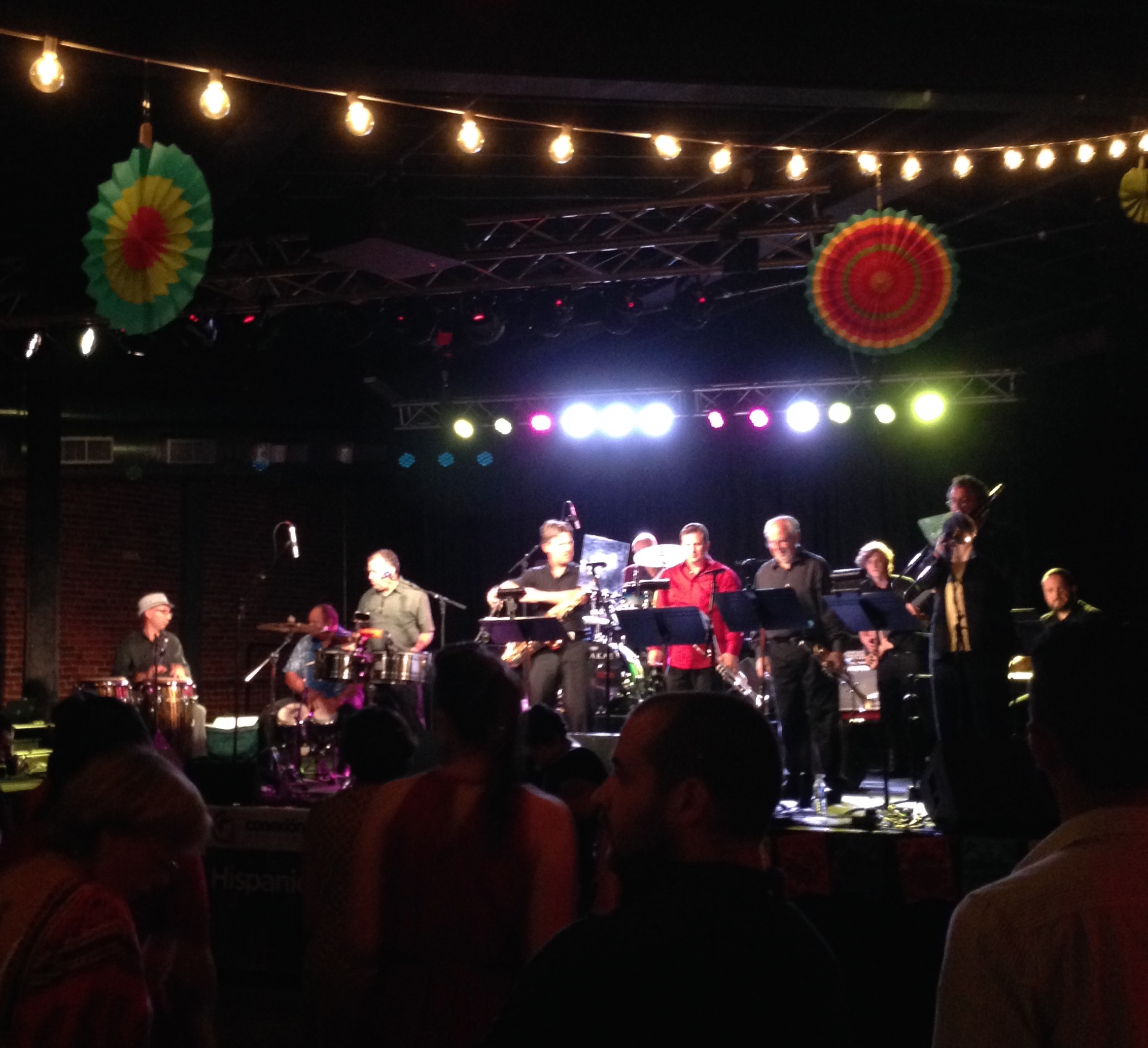
Lalo Davila & Friends hold forth at Conexión Américas’ Hispanic Heritage Celebration #THELATINPARTY at The Cannery Ballroom, Nashville, September 12, 2015
This weekend has been a typical example of how incredibly diverse and dynamic the music scene is in this town – and I’m only speaking for events/activities I witnessed or was a part of.
For today’s post I depart from my usual in-depth-article format and bring to you a brief, breezy, gossip-column style rundown of my weekend.
As anybody who’s lived here for any length of time knows, this cornucopia of musical delights is typical of what Nashville has to offer on a regular basis. It’s simply the best town to be a musician or a music lover in, period.
How Anna Joined The Symphony
This is the story of how Anna joined the Nashville Symphony.
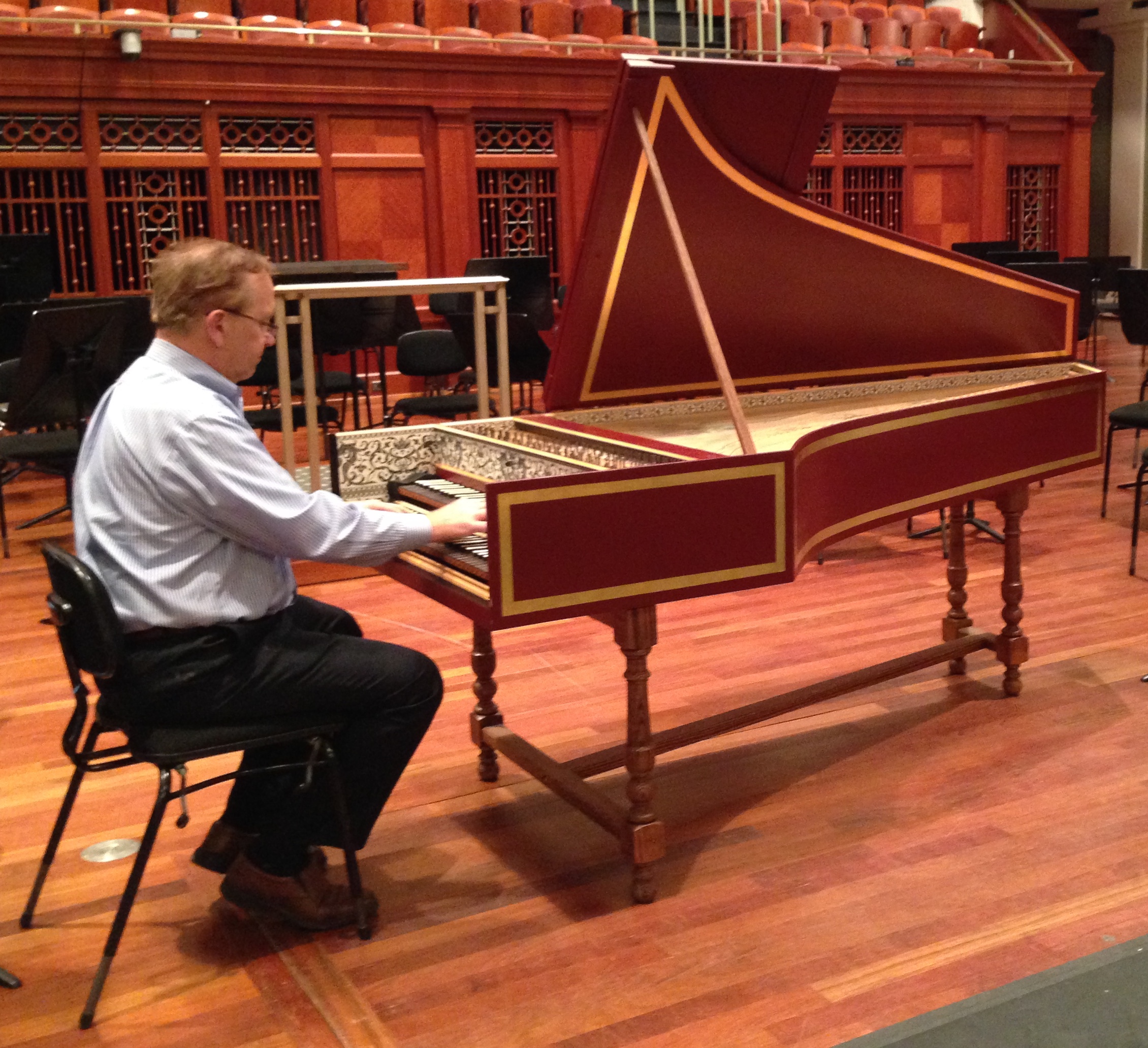
Nashville Symphony Principal Keyboard Robert Marler takes Anna for a test drive on the stage of Laura Turner Hall
It’s a bit of a convoluted tale – like many stories, some unexpected things happened, one thing led to another, and once you start trying to find all the threads in the fabric you realize that the real beginnings probably go back a lot further than you originally thought.
Anna is a ten year old double-manual Franco-Flemish harpsichord.
Keith Jarrett Turns 70
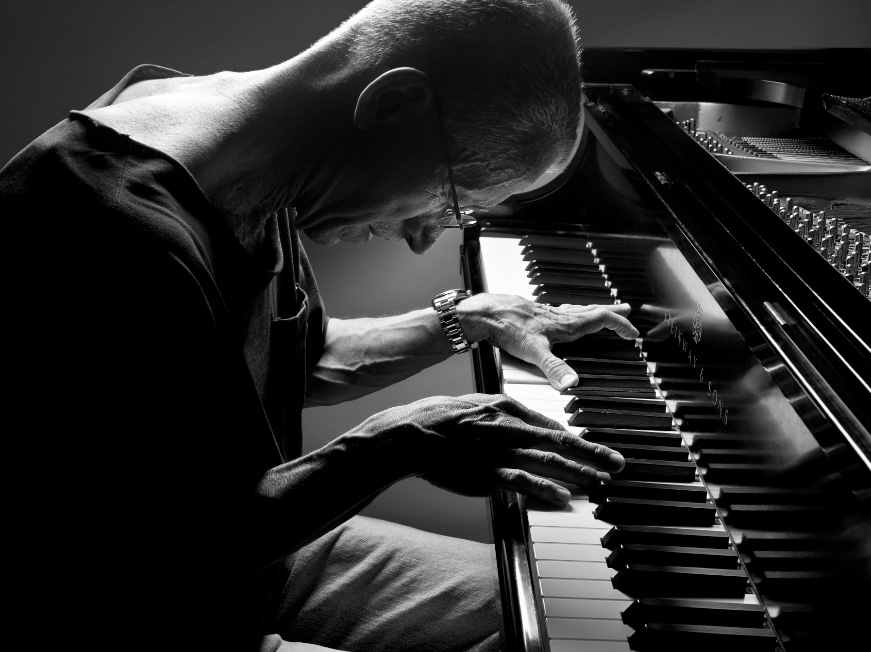 Keith turns seventy today. For those reading this who are not familiar with him, Keith Jarrett is an American treasure, and one of the most important musicians alive today. He is among the most accomplished improvising musicians in history and we are fortunate that we live in the age of recording technology: we have a voluminous record of his career spanning nearly five decades that catalogs his development as an artist, as well as many of his experiments and side-projects. In addition to his stature now as senior jazz statesman, Keith is also an accomplished performer of classical music, with many recordings of Bach and Mozart, etc. as well as music of 20th century composers (including himself) to his credit.
I realize that beginning a post with superlatives is contentious, but considering Keith and his life as a musician, it seems fitting to me – he has been nothing if not controversial. Through his entire career Keith has very much followed his own path, refusing to compromise on his ideals even to his own detriment. Looking back on his career as he enters his eighth decade, I am not familiar with any other pianist who has accomplished such profound music-making as both jazz and classical artist. I am aware of no other musician of any genre or instrument who has filled concert halls consistently for decades with audiences who come to hear completely improvised solo concerts, led several acclaimed jazz ensembles including the longest lived (more than 30 years) and most respected piano trio still performing today, and devoted a substantial amount of time (more than a decade) and energy to recording and performing classical music, as a soloist and concerto performer, and as a composer. There is nobody else who has done this, nor done it so well, nor for so long.
Meet The Recorder

1996 (click images to enlarge)
This is the first in a series of occasional posts about the recorder, its historical and contemporary repertoire, its champions, and its place in music education.
Being a recorder player has been a humbling experience. The recorder is not highly regarded in American musical culture, and most people who know of the instrument only know it because they were given a cheap plastic recorder in elementary school and learned to play a few simple tunes on it in a classroom setting. Occasionally I meet someone who is familiar with it from its occasional use by folk music groups or recognizes the instrument from the opening of Led Zeppelin’s Stairway to Heaven (or perhaps I’ve Seen All Good People by Yes). Most people – including many classical musicians I have met, and many elementary school music teachers who actually teach recorder to their music classes – are unaware of or uninformed about the recorder’s long history, or of its beautiful if modest historical repertoire that includes works written specifically for recorder by masters including J.S. Bach, Händel, and Vivaldi, or of it’s employment in virtuosic avant-garde compositions since the 1960s.
Our Friend Sebastian

Anna Magdalena Bach’s autograph of Menuet in G, 1725
Today is the 330th birthday of Johann Sebastian Bach.
Like so many of us, I first encountered his music as a child. I don’t actually remember the first time I heard it – it might have been at church, it might have been in a piano lesson. I am pretty certain that the first piece that I became aware of and associated with his name was Menuet in G. It was only years later that I learned that scholars actually now believe this piece was written by Christian Petzold (1677-1733), but no matter. Sebastian is still credited as the composer in most piano books one will encounter, and if it was good enough for his children…
 Walter Bitner