
Home » Posts tagged 'teaching' (Page 4)
Tag Archives: teaching
The Accelerando Begins
 This fall, Nashville Symphony Education & Community Engagement staff have been very busy not only with the delivery of the Symphony’s current education and community programming as often described here on Off the Podium, but with preparations for the launch of our new Accelerando program in 2016.
The launch of Accelerando was announced at a press conference on September 28, and we have been working closely for the last months with representatives from the orchestra and from our community partners – and with others both within our community and beyond – to plan all the details of the launch and make plans for what amounts to the establishment of a small but intensive music school for students from underrepresented communities based here at Schermerhorn Symphony Center, but reaching in many directions out into the community.
The Boar’s Head Carol.

posing with the Boar’s Head before a Tastes & Sounds of the Season performance, Nashville School of the Arts, 2012 ~ photo by Brooke Semar
This is the first holiday season in years that I have not spent consumed by the preparations and execution of a big school performance. Over the last 25 years I directed many of these, with students of all grade levels K-12. In fact, for much of my adult life, I have spent most of each fall listening to, arranging, teaching, and rehearsing Christmas and holiday music – beginning as early as August in some years.
However, in the last few months when I found myself reminiscing about it, I realized that it was already far too late to write anything that would be of any immediate use or interest to choir directors and elementary or middle school music teachers who may read this – most initial planning for these extravaganzas happens in the summer.
I decided to put off writing in earnest about my experiences producing these performances – and my thoughts on how and why to do so – until next summer, when it will hopefully be more useful. But so as not to gloss over the whole issue without any consideration at all, we will content ourselves with a single post this season about a carol whose performance became a hallowed and beloved tradition for so many of my students over the years. I am talking about, of course, The Boar’s Head Carol.
What Kind of Human Being Do You Want To Be?
Music Education and the Whole Child
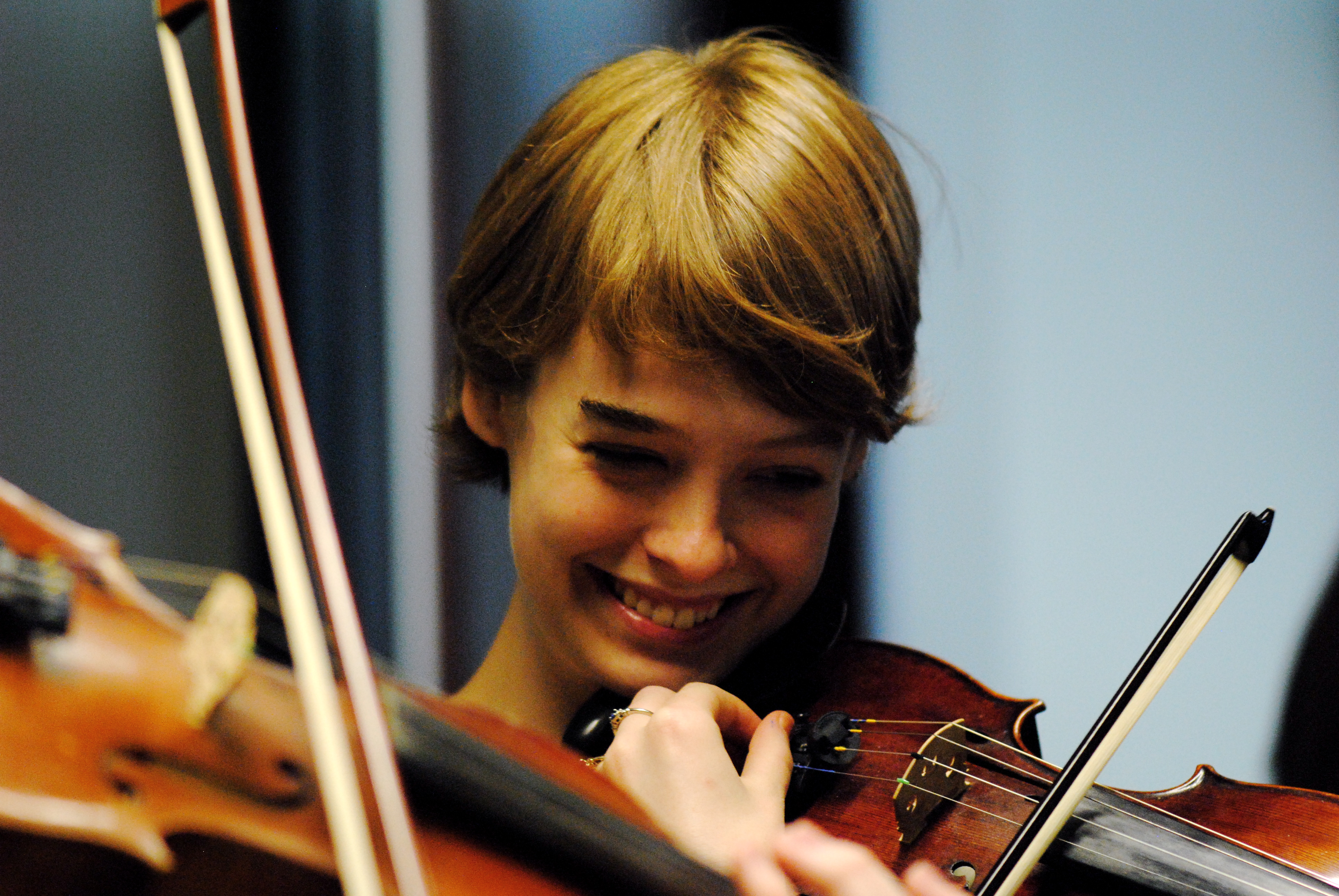
This weekend I attended a chamber music recital presented by a small local community music school. Roughly twenty students from middle and high school presented an hour of short pieces for small ensembles: music for woodwinds and strings, with a couple of pieces featuring voice as well. The students represented a wide range of experience, accomplishment, and commitment; some of these children will go on to study music in college and perhaps even pursue professional careers as performers or educators, while others will likely put their instruments away for good by the time they graduate from high school.
Regardless of the differences in commitment for the students and their families – to say nothing of the teachers – all of them clearly regard music as an important part of their lives. Parents make it possible for their children to attend weekly lessons and regular ensemble rehearsals, have the instruments and other materials they need, and the students must exert consistent effort over a long period of time (years) to learn how to play their instruments and develop at least enough acumen that they derive satisfaction from the process.
Why do they do it?
How to Teach Recorder Fingerings
This post is especially for those teaching the recorder to children in school settings – but it might be worth a look if you are learning how to play the instrument as well.

playing recorder with Blue Rock School students, 1991
I hope that this brief post will be helpful to those teaching recorder in elementary school who have little or no background with the instrument as players themselves. My impression is that most elementary school music teachers haven’t actually studied recorder for its own sake (e.g taken lessons, played in a consort or performed solo recitals on recorder, etc.). I thought about the topic of this post recently when I remembered that I have never encountered middle or high school students that had been taught recorder in elementary school (by someone other than me) who were familiar with this system.
Nashville Symphony Announces Accelerando
In 2016, the Nashville Symphony will launch Accelerando, an intensive program designed to prepare gifted young students of diverse backgrounds for pursuing music at the collegiate level and beyond.
Accelerando seeks to create professional opportunities for musicians from ethnic communities underrepresented in today’s orchestras by providing them with instruction, mentorship, performance experience and assistance with applying for music schools. With the resources of a major American orchestra, these students will be able to realize their full potential and will form the next generation of orchestra musicians.
Solfège With Amadeus
 Part 4 of a 4-Part Series
Go to Part 1: The Joy of Solfège
Go to Part 2: The Legacy of Guido d’Arezzo
Go to Part 3: Teaching Music With Solfège
This Epilogue to my series of posts on Solfège recounts examples of solfège exercises I used in high school choir rehearsals, some anecdotes about singing Mozart’s Requiem on solfège syllables, and some unexpected things we learned from doing this.
Teaching Music With Solfège
 Part 3 in a 4-part series
Go to Part 1: The Joy of Solfège
Go to Part 2: The Legacy of Guido d’Arezzo
This is a simple but somewhat thorough description of the syllables for movable do solfège with la-based minor and how I applied them in my work as a teacher. I do not claim this method as an example of haute Kodály, Gordon, or any other technique – for me solfège was always a means to an end, not an end in itself. We used it for exercises to develop skills, and to learn notes accurately – and when these goals were achieved we left it behind.
The Legacy of Guido d’Arezzo
Part 2 in a 4-part series

Go to Part 1: The Joy of Solfège
Solfège is a practical method for teaching sight-singing (singing music from written notation). Each note of the diatonic scale is assigned a solfège syllable. This practice is called solmization.
The Joy of Solfège
 Part 1 in a 4-part series
Most of the country is still enjoying summer vacation, but here in Nashville the school year begins the first week of August – no lie. This will be the first fall in many years that I am not starting a new school year as a teacher, although I am still vicariously experiencing it as a parent. Forgive me if I wax nostalgic.
For all of my teaching career – save for 2008 – 2011 when I ran the piano studio at Nashville School of the Arts and simultaneously directed Music City Youth Orchestra – I was in some part, often for the most part, a singing teacher. And so it is natural for my thoughts to turn, at this time of year, to the wonders of solfège. For so many years, the use of this invaluable tool, the practice of this incomparable method was a staple of my daily life. How many thousands of hours have I spent solfèging songs or vocal parts, or teaching students to do so, or doing it with them? How could I have done my work without it? Oh thou noble art. (more…)
Trust
This article is a companion to my previous post Wholehearted Attention.

from my Instagram feed: Nashville Symphony Education & Community Engagement Program Manager Kelley Bell guides a young guest in playing his first notes on the trumpet before our Community Concert at Centennial Park, Nashville, June 4, 2015
It’s generally accepted that one of the goals of education – beyond the attainment of specific content objectives – is to instill in the child a love for learning. It has been my experience however, that a love for learning is part of a child’s natural state and does not need to be instilled. Children who exhibit behavior to the contrary have most often faced social and/or emotional difficulties that impede their inherent wish to learn and grow; some of a teacher’s work involves trying to determine what these obstacles are and finding ways around them. Beyond providing the child an acquaintance with and proficiency in the broad array of subjects necessary for success in life, the overarching goal of education might be better described as enabling the child to become her own teacher.
 Walter Bitner