
Anton Bruckner and his Romantic Symphony
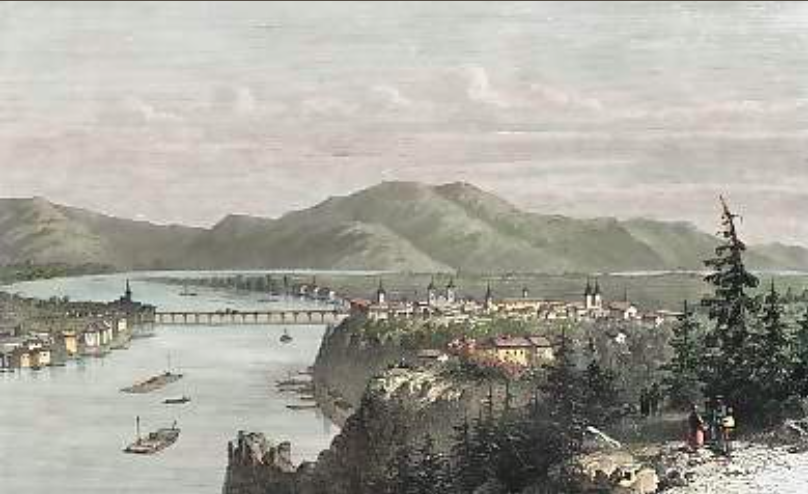
Linz, Austria ~ engraving by J. Ouartlev, 1863
Austrian composer and organist Anton Bruckner is primarily known today for his symphonies – his music is often paired with that of Gustav Mahler as the apotheosis of the late Romantic Austro-German symphonic tradition. Although Bruckner and Mahler symphonies share many characteristics – a common musical heritage and language, the robust late nineteenth century orchestra, sprawling scales and harmonies in which the symphony seems to encompass an entire world of expression – in many ways their music also differs. Mahler was 36 years younger than Bruckner, whom Mahler admired and considered his forerunner – at 17 years old, Mahler was present at the premiere of Bruckner’s Third Symphony in 1877. Mahler famously said “A symphony must be like the world. It must contain everything.” and his symphonies contain myriad references to themes, experiences, and objects from life. Many of Mahler’s symphonies incorporate vocal soloists and chorus – and hence text – whereas Bruckner’s symphonies are without exception purely instrumental works (which is interesting to note as Bruckner also composed many sacred choral works in addition to his symphonic output). Bruckner’s symphonies inhabit a more abstract, elemental “tone world” than Mahler’s – every bit as overwhelming, inspiring, and at times terrifying as Mahler’s, but for the most part at more of a remove from direct references to the world we live in. The Romantic Fourth Symphony is an exception.
The Brandenburg Concertos

disputed portrait of Sebastian by Johann Ernst Rentsch the Elder (d. 1723) painted c. 1715, which would make him 30 years old here. Sebastian wrote the Brandenburgs in his early- to mid-thirties and submitted them to the Margrave in 1721
Johann Sebastian Bach’s Brandenburg Concertos are in the front rank of the masterpieces of Western music, and are his most-performed and best-known works. Ironically, these remarkable pieces are not simply the best or most popular works from a large number of similar efforts, as for instance is the case of Vivaldi’s The Four Seasons – they are unique in Sebastian’s oeuvre in almost every way. The Brandenburgs are not representative of Sebastian’s output except in the masterful manner of their composition and in the virtuosic forces needed to perform them.
Nashville is Music City
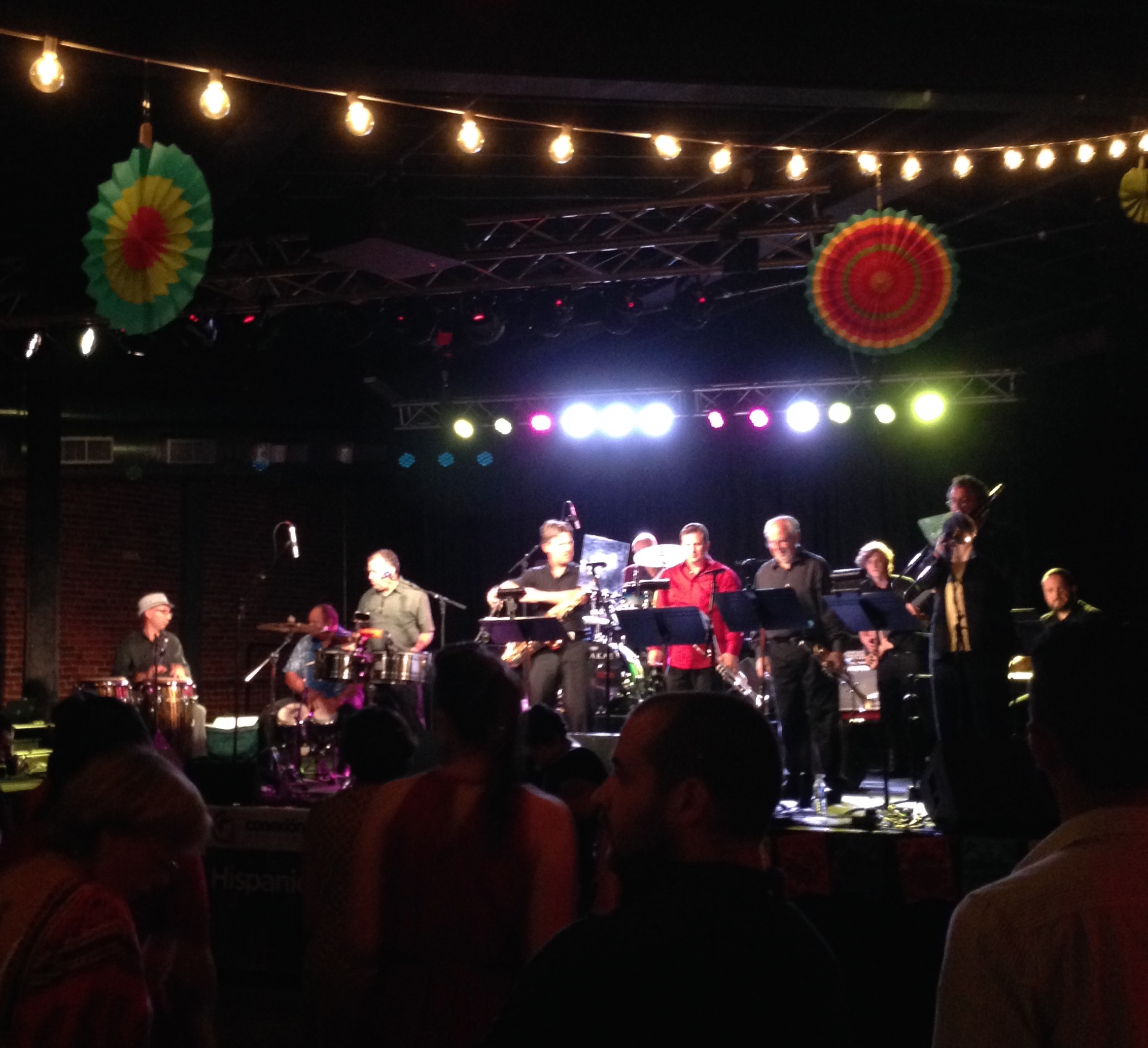
Lalo Davila & Friends hold forth at Conexión Américas’ Hispanic Heritage Celebration #THELATINPARTY at The Cannery Ballroom, Nashville, September 12, 2015
This weekend has been a typical example of how incredibly diverse and dynamic the music scene is in this town – and I’m only speaking for events/activities I witnessed or was a part of.
For today’s post I depart from my usual in-depth-article format and bring to you a brief, breezy, gossip-column style rundown of my weekend.
As anybody who’s lived here for any length of time knows, this cornucopia of musical delights is typical of what Nashville has to offer on a regular basis. It’s simply the best town to be a musician or a music lover in, period.
Boy Wonder
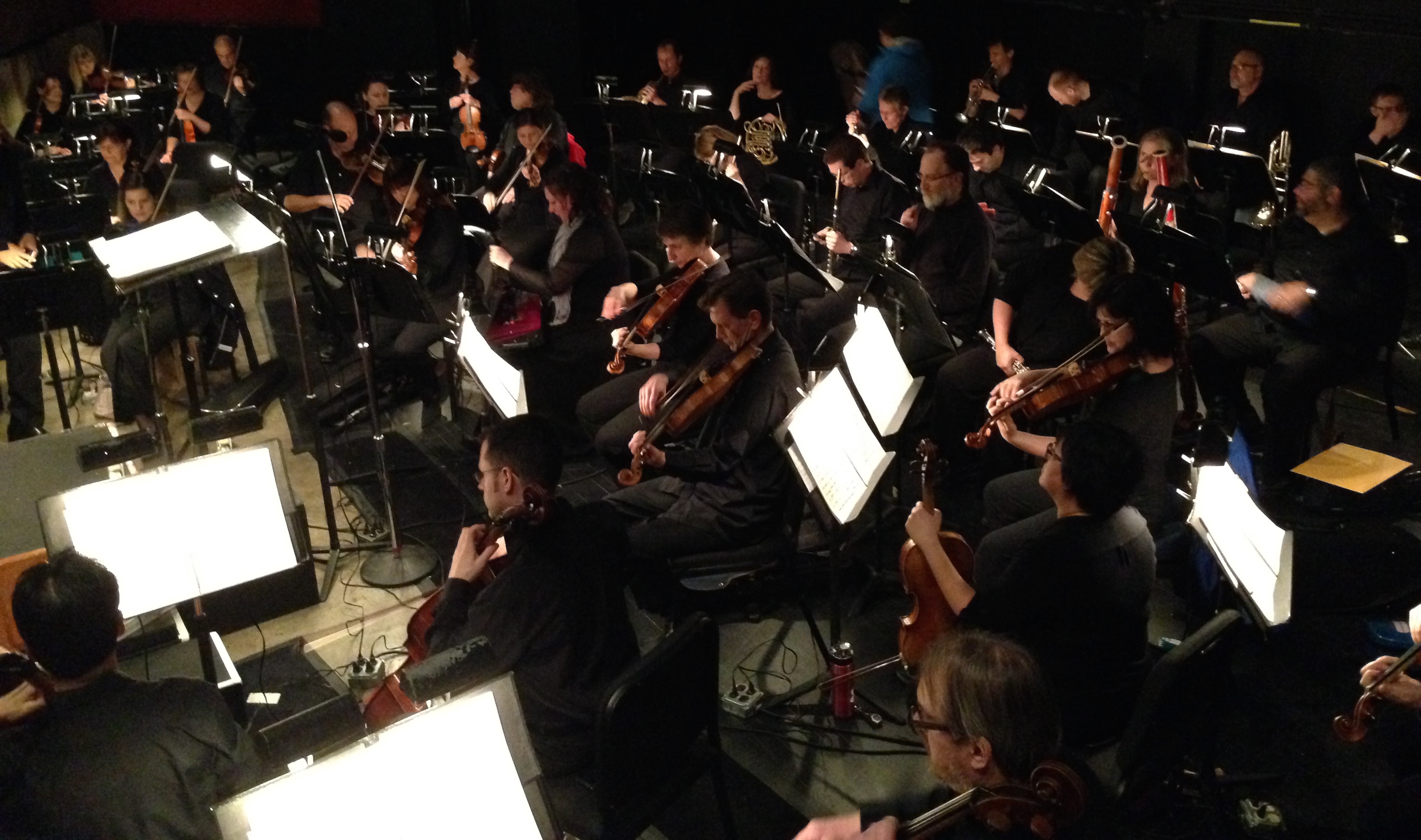
The Nashville Symphony warms up in the pit at TPAC’s jackson Hall before a performance of Mendelssohn’s A Midsummer’s Night Dream with the Nashville Ballet, April 24, 2015
Nashville Symphony musicians are in the process of performing in three programs featuring the music of the German Romantic composer Felix Mendelssohn. Beginning last Friday through Sunday, the symphony accompanied the Nashville Ballet in Mendelssohn’s A Midsummer Night’s Dream at TPAC’s Jackson Hall.
Then (TONIGHT) Wednesday evening, April 29, symphony violinist Jessica Blackwell leads two string ensembles in performances of Mendelssohn’s famous Octet, as well as the Prelude and Scherzo, Op. 11 for string octet by Dmitri Shostakovich, as part of our ongoing Onstage series of free chamber music performances at Schermerhorn Symphony Center.
Finally, beginning (TOMORROW) Thursday, April 30 with performances following on Friday, May 1 and Saturday May 2, the symphony will perform Mendelssohn’s Piano Concerto No. 1 with guest soloist Benjamin Pasternack in a program that also includes music by contemporary composer Frank Tichelli and Tchaikovsky’s Symphony No. 6 “Pathetique”.
Brahms Requiem at West End UMC

Brahms Requiem at West End United Methodist Church, April 19, 2015
This weekend I was reminded of the embarrassment of riches we have in Music City. The symphony presented fabulous concerts on Friday and Saturday, featuring two works by American composer Michael Daugherty, both recent and one (Tales of Hemingway for Cello and Orchestra with the incomparable Zuill Bailey) a world premiere, alongside standard repertoire by Beethoven and Stravinsky. On Sunday, Music City Baroque presented their 10th Anniversary Season Finale with a performance of the Vivaldi Gloria at St. George’s Episcopal Church, and West End United Methodist Church presented a performance of A German Requiem by Johannes Brahms featuring their Chancel Choir under the direction of Matthew Phelps, with Margy Bredemann, soprano, and Jonathan Carle, baritone. Both of Sunday’s concerts were free.
Leitmotif in Mahler’s Ninth Symphony

The Nashville Symphony warms up before a performance of Gustav Mahler’s Ninth Symphony, February 27, 2015.
When I was 17 my family moved to Claremont, California, and I had the good fortune to meet and study piano with Gary Davenport, a Juilliard graduate who had recently returned home after many years in New York. Gary at 30 was a brilliant and accomplished pianist, a tall thin guy with a droopy mustache who chain-smoked tall thin More cigarettes through my lessons, which I played on one of two seven-foot pianos in his living room. One morning after a lesson, Gary invited me to stay after for coffee. This was not an unusual event – often we would hang around in his kitchen and talk about music or the dissertation he was writing after we finished in the living room.
On this particular morning while the coffee grounds were steeping in the French press, Gary told me he had something he wanted me to hear (again, this was not unusual) and put a record on the turntable. It was the Chicago Symphony’s recording of Mahler’s Ninth Symphony conducted by Carlo Maria Giulini, and it was my first acquaintance with Mahler’s music. I was studying pretty standard piano fare with Gary: Bach preludes and fugues, Beethoven sonatas, etc. – but this was something completely new. I will never forget standing on the floor of his tiny kitchen as I listened to the opening bars of the Ninth for the first time, spellbound as the pointillist orchestration coalesced into the first theme and built to the climax at m. 46. Gary looked at me at that moment – when Guilini (characteristically) pushes the ritardando on that bar to the point where it becomes a fermata – and then, after the a tempo, he took the needle off the record, packed it back into the album’s sleeve, and put it in my hands. “Take this home and listen to it.” he said, “When it comes to the symphonic repertoire, Bruckner and Mahler are where it’s at.”
Thus began my relationship with the music of Gustav Mahler.
 Walter Bitner